
Certification
CO2 and Nitrogen Tank Certification Guide
Every beverage gas cylinder has a certification date that determines whether it can legally be refilled. This guide covers hydrostatic testing, how to read your tank's certification stamp, tank specifications, and what to do if your cylinder fails inspection — everything you need to know before ordering a CO2 or nitrogen tank exchange.
What Is a Hydrostatic Test?
A hydrostatic (hydro) test is a pressure test required by the U.S. Department of Transportation (DOT) to verify the structural integrity of high-pressure gas cylinders. During the test, the cylinder is filled with water and pressurized above its normal working pressure. Cylinders that pass continue in service; cylinders that fail are condemned and must be taken out of service.
How to Read the Tank Date
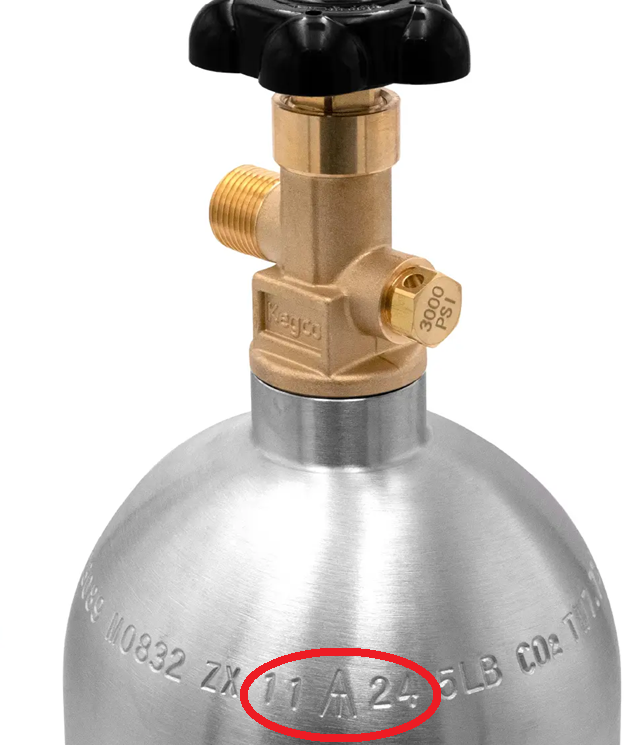
The certification date is stamped into the collar (crown) of the cylinder. The format is MM★YY — for example, 11★24 means November 2024.
CO2 and nitrogen cylinders must be retested every 5 years. If the certification date is more than 5 years old, the tank cannot be refilled until it passes a new hydro test.
Tank Specifications
5 lb Tank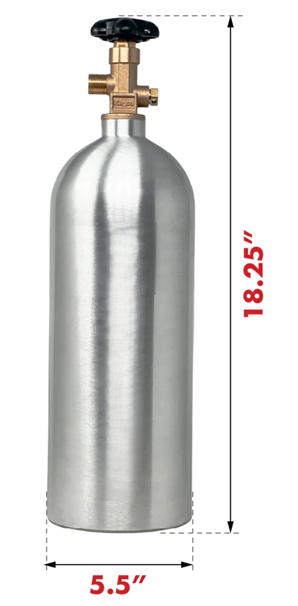
|
20 lb Tank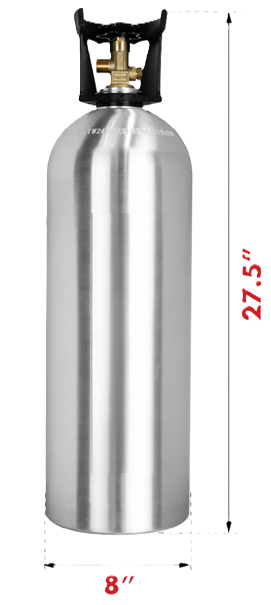
|
Valve Standard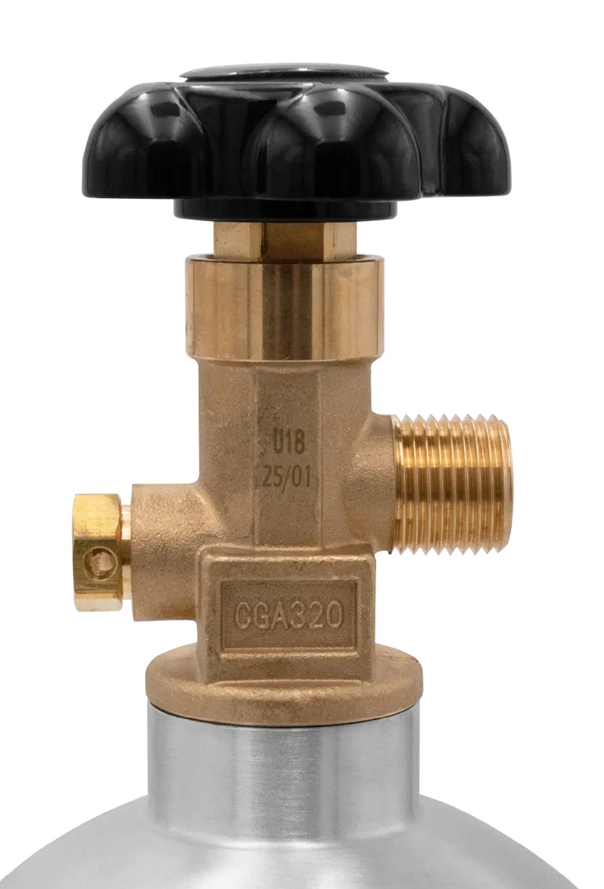
All CO2 cylinders use a CGA320 outlet — the standard connection for beverage-grade CO2 regulators. |
Aluminum vs. Steel Cylinders
Aluminum
- Lighter weight — easier to transport
- Naturally corrosion-resistant
- Typical service life of 24–30 years
- Common choice for portable setups
Steel
- Heavier but highly durable
- Can be re-qualified indefinitely
- More resistant to physical damage
- Common in commercial and bar environments
If Your Tank Fails Inspection
When a cylinder does not pass a hydrostatic test, or the certification date is more than 5 years old, the following process applies:
- Photograph the tank — Document the certification stamp and any visible damage before sending.
- Contact Gas2Door — Reach out to schedule a pick-up or drop-off for the condemned cylinder.
- Tank is sent for testing — We submit the cylinder to a DOT-certified testing facility on your behalf.
- Flat fee applied — A $45 flat hydro-test fee covers the inspection regardless of outcome.
- Results & next steps — If the tank passes, it is returned re-certified. If it fails, we will help you source a replacement.